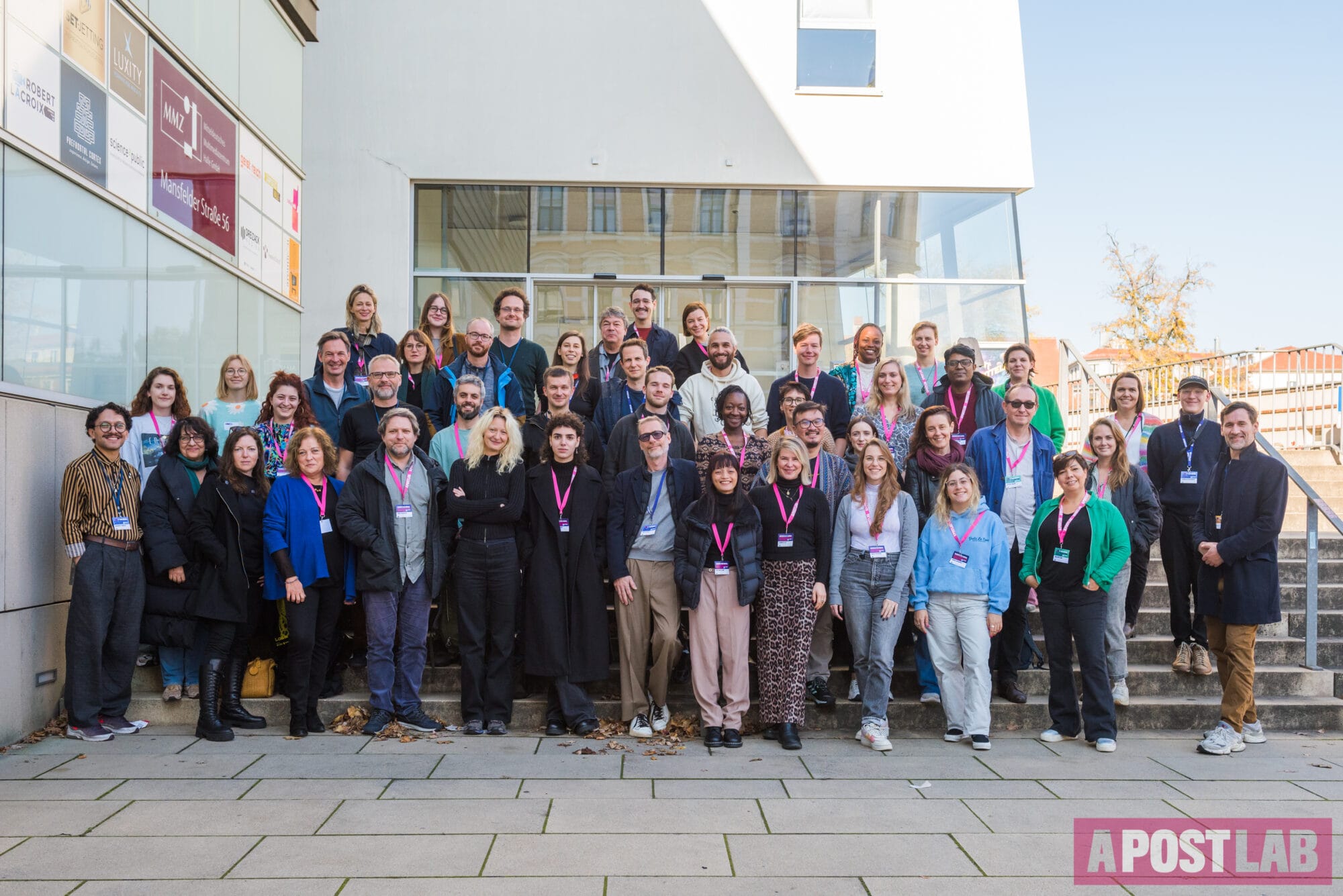
Post Supervisor, Participant of the APostLab Annual Workshop in Halle, Germany, 2024
What drew you to participate in APostLab?
Pedro: For me, joining APostLab was a natural next step. I already knew Niko, and I had taken part in other post supervision trainings, one of which was in partnership with APostLab. It had been on my radar for a while, and I’d always heard great things from colleagues who participated in previous editions. I wanted to deepen my skills and expand my understanding of post-production, so it made perfect sense.
How did that experience influence your professional path?
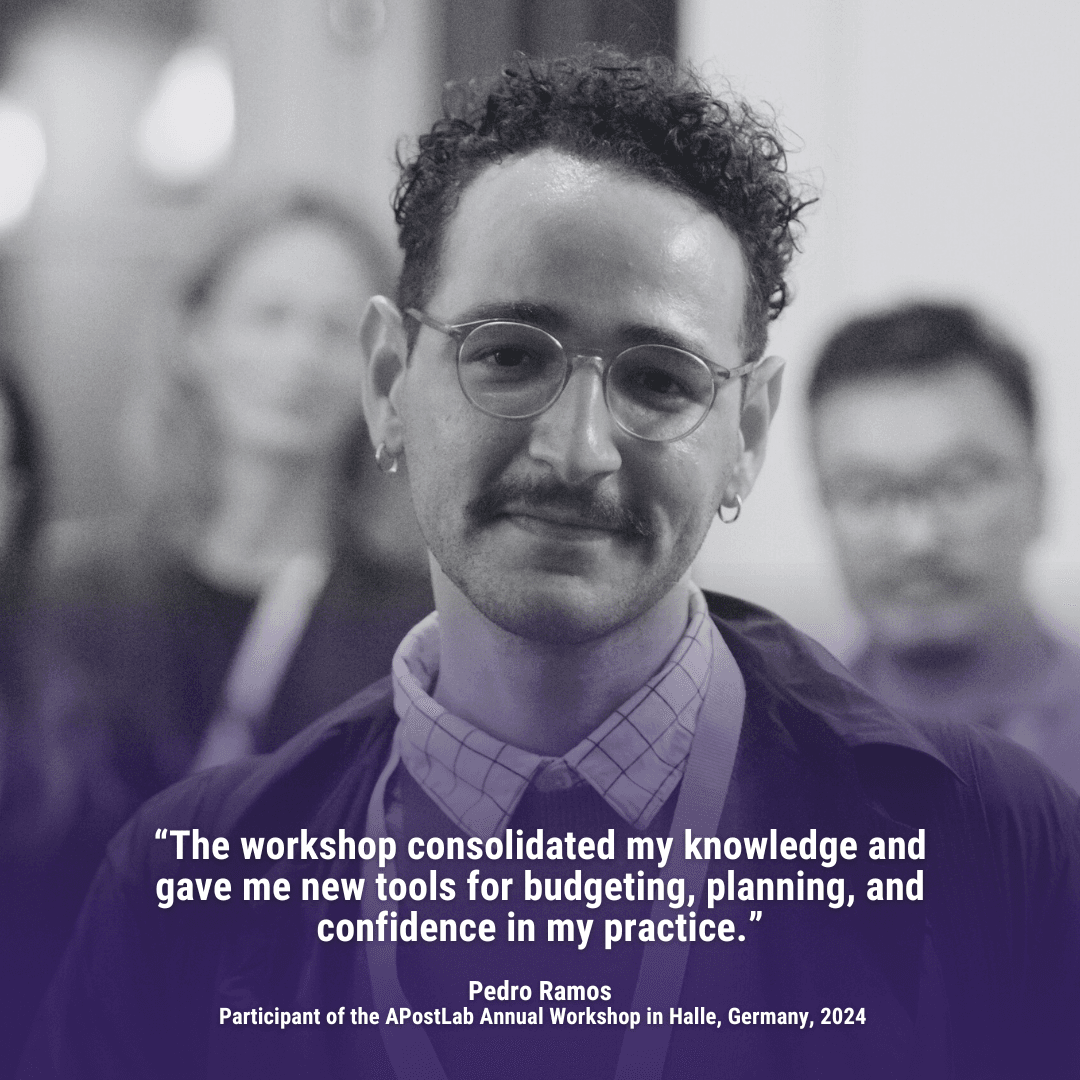
Pedro: It had a big impact. The workshop consolidated a lot of knowledge I’d been building through practice. It gave me both a solid technical foundation and new tools for budgeting, planning, and understanding how all the pieces of post-production fit together. I also gained more confidence in my practice, which was really important.
Have you been able to adapt those learnings to your day-to-day work?
Pedro: Definitely. I may not have applied everything yet—because there was a lot of information—but much of it is already in use. Some things I’m still unpacking. Sometimes I go back to my notes from the workshop when I’m facing a challenge and find that something we covered applies directly.
Was there a particular moment or mindset that stuck with you from the workshop?
Pedro: Yes. I remember the final dinner, when everyone received their diplomas and shared their key takeaways. Many of us felt the same: “This was a lot of input—now how do we integrate it into our daily work?” That’s something I’ve kept thinking about—how to turn all that knowledge and exchange with other participants, trainers, and guests into something practical. It’s still an ongoing process.
Can you tell me more about your current work?
Pedro: I work in-house at Coproduction Office, a production and international sales company, and I’m involved in both areas of the business. That includes overseeing post-production for some of our projects, managing deliveries and working closely with sales agents, distributors, festivals, and vendors. It’s a good mix of responsibilities across different parts of the industry.
What would you say are the key elements of a successful collaboration between a producer and a post supervisor?
Pedro: Communication, without a doubt. Keeping an open, honest flow of communication helps both sides do their job better and ultimately serves the project. It’s essential.
Any advice for someone starting out as a post supervisor—or thinking about it?
Pedro: My advice would be: just do as much as you can and gain experience. There’s no one clear path into filmmaking. People come from all kinds of backgrounds. I started in architecture, then moved into art direction, editing, directing documentaries, working in immersive media, and eventually into post supervision. Every step taught me something valuable. So it’s about staying curious, building skills as you go, and learning by doing.
I find it fascinating how many people in film come from different industries. It really shows how diverse the field is.
Pedro: Yes, and even if the skills aren’t directly transferable, the way of thinking often is. Film is such a collaborative space, and it attracts people from all walks of life who share the goal of creating something together.
Are you still in touch with people from your APostLab cohort?
Pedro: Absolutely. That sense of community was one of the most valuable parts of the experience. I made close friends and developed connections that continue to be useful—whether it’s sharing information, asking for advice, or just understanding that others are facing similar challenges, even across countries and project scales.
How does APostLab compare to other workshops you’ve attended?
Pedro: Honestly, I don’t think there’s anything else like it in Europe for post-production. The scope is really unique—360 degrees of training, with amazing trainers, speakers, and guests. One part I found especially enlightening was the insight into production—understanding how producers think and what challenges they face when planning post-production. That cross-disciplinary exchange was incredibly helpful.
When you joined APostLab, you were already established in your current role. How has the workshop influenced your work since then, and what kinds of projects have you been focusing on recently?
Pedro: Right now I’m really happy while continuing to develop in post-production. My job involves a lot of different things—from working with producers and vendors to coordinating with festivals and handling restoration projects. It’s very dynamic, which keeps it exciting and challenging. Recently, I’ve also had the chance to complete several productions, including the restoration of Carlos Reygadas’ Silent Light, which was a particularly rewarding experience.
Anything else you’d like to add?
Pedro: I’d just like to express my appreciation for APostLab. The work the team does is incredibly important. You can really see the care, passion, and hard work they put into it. And I know it has a real impact—not just on the careers of those who attend, but on the industry as a whole, especially through the community it builds.
Interview conducted by Monse Higareda Patrón (July, 2025).
