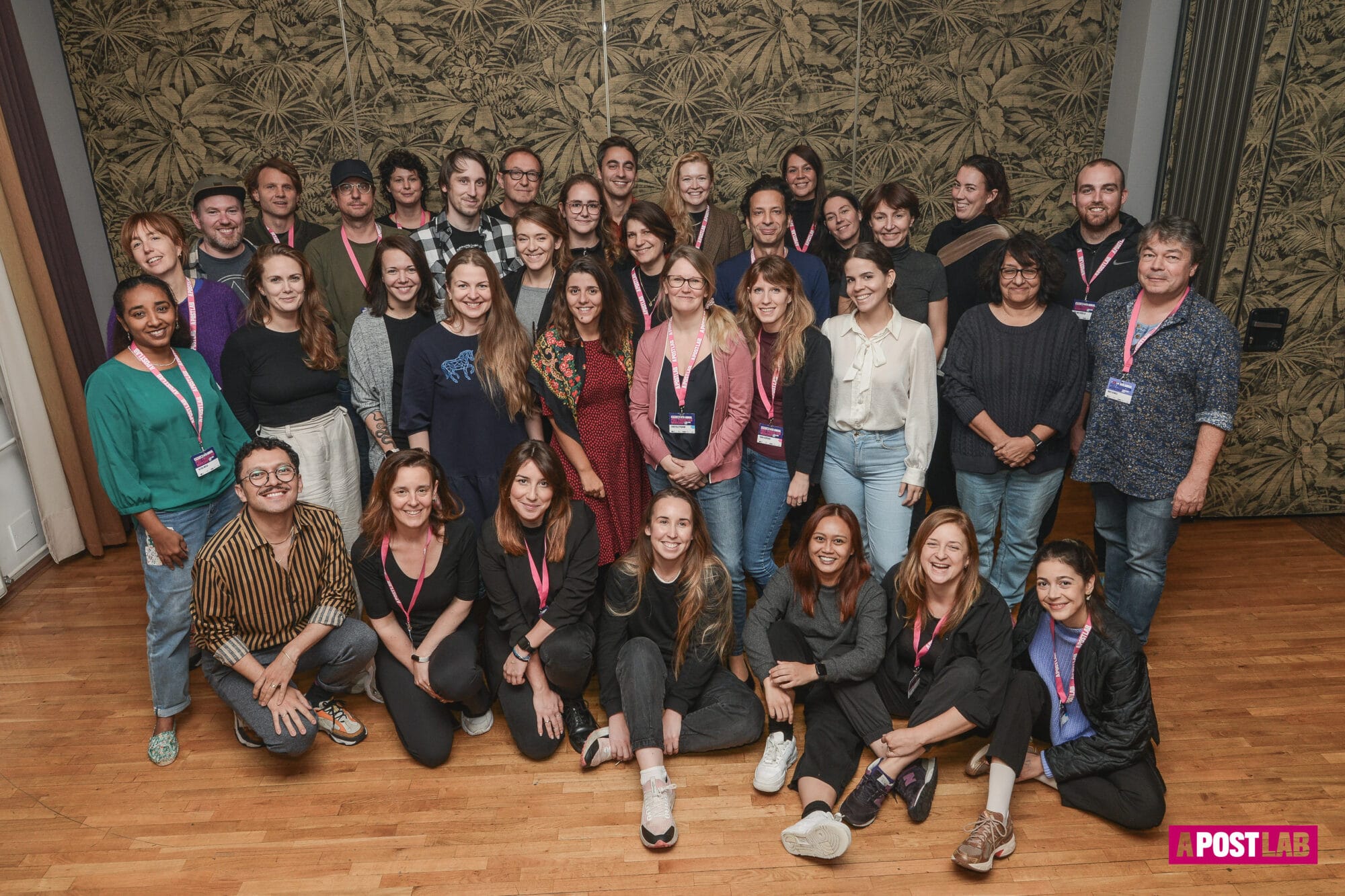
Producer, Participant of the APostLab Annual Workshop in Ljubljana 2023
What inspired you to apply for APostLab?
Honestly, curiosity. Nobody recommended it, I just saw the call and thought, “This is about post-production, and I need to know more.”
On my previous project, How Is Katia?, the post wasn’t complicated, but it still gave me gray hairs. In Ukraine, we often don’t have dedicated post supervisors, and the approach is very different from countries like Germany or France. I wanted to learn how European productions manage it.
At first, I was afraid it would be too technical, but Niko reassured me: “Don’t worry, this is for producers like you. You don’t need to know every technical detail, you need to understand the process, the structure, the budgeting.” That gave me confidence.
Can you tell me what happened with the project you applied with, “TEURA”?
That was actually the first workshop we did with that project. I worked with my partner, Olena Morentsova — co-writer and producer. From the start, we knew it was complicated: a period story with heavy post-production needs. At the workshop, everything changed.
Speaking with tutors like Niko, Antoine, and Roshi, we realized we should shoot more on real locations instead of relying on post, even though it’s more expensive. They also encouraged us to go deeper in unveiling the personal path of Sofia Yablonska, which is very relevant and reflects the modern times feelings and challenges of Ukrainian women, who had to move out of Ukraine because of the Russian invasion.
We rewrote the project, went to Torino Film Lab, and now it has grown into a major international co-production between Ukraine, France, Morocco, and hopefully Germany. We just applied to Creative Europe.
What was one of the biggest lessons from the workshop?
Many, but one moment really shocked me. In a session on music rights, I realized how complicated and expensive clearing music can be. Another eye-opening moment was when tutors broke down an actual film scene and showed exactly how much each second of it cost in post-production.
That kind of concrete example is invaluable. As a producer, you suddenly see, “Okay, this shot might cost €200, €2,000, or €20,000.” It helps you plan realistically.
Also, my strongest recommendation: apply with the real project. By the end of APostLab, you’ll leave with a post-production budget and a clear roadmap, saving a producer so much headache.
What advice would you give to producers considering APostLab?
For young producers, it’s perfect! it gives awareness of the whole production chain. Many workshops focus on story, but APostLab shows what happens with the actual material: editing, color grading, sound, deliverables.
For experienced producers, it’s just as important because technology changes fast. Something you did five years ago may be outdated today. And of course, it’s about meeting great people, that’s maybe the most valuable part.
How do you approach working with post supervisors now?
Be open, and don’t be afraid to ask “stupid” questions. Post supervisors know more than producers ever will — that’s okay. Our job is to understand the structure, the top of the iceberg, not every technical detail.
Sharing perspectives is powerful. Producers and post supervisors often don’t realize how hard the other’s job is. But once you start collaborating, you see: “Ah, your work is complicated too!” Mutual respect is the basis of strong collaboration.
Any final thoughts?
A huge thank you to the APostLab team. You’ve created not just a workshop, but a real community built on trust and support.
For producers hesitating to apply, don’t. Even if your project is in early development, APostLab gives you a chance to see it from another angle and strengthen it before production.
Interview conducted by Monse Higareda Patrón (September, 2025).
