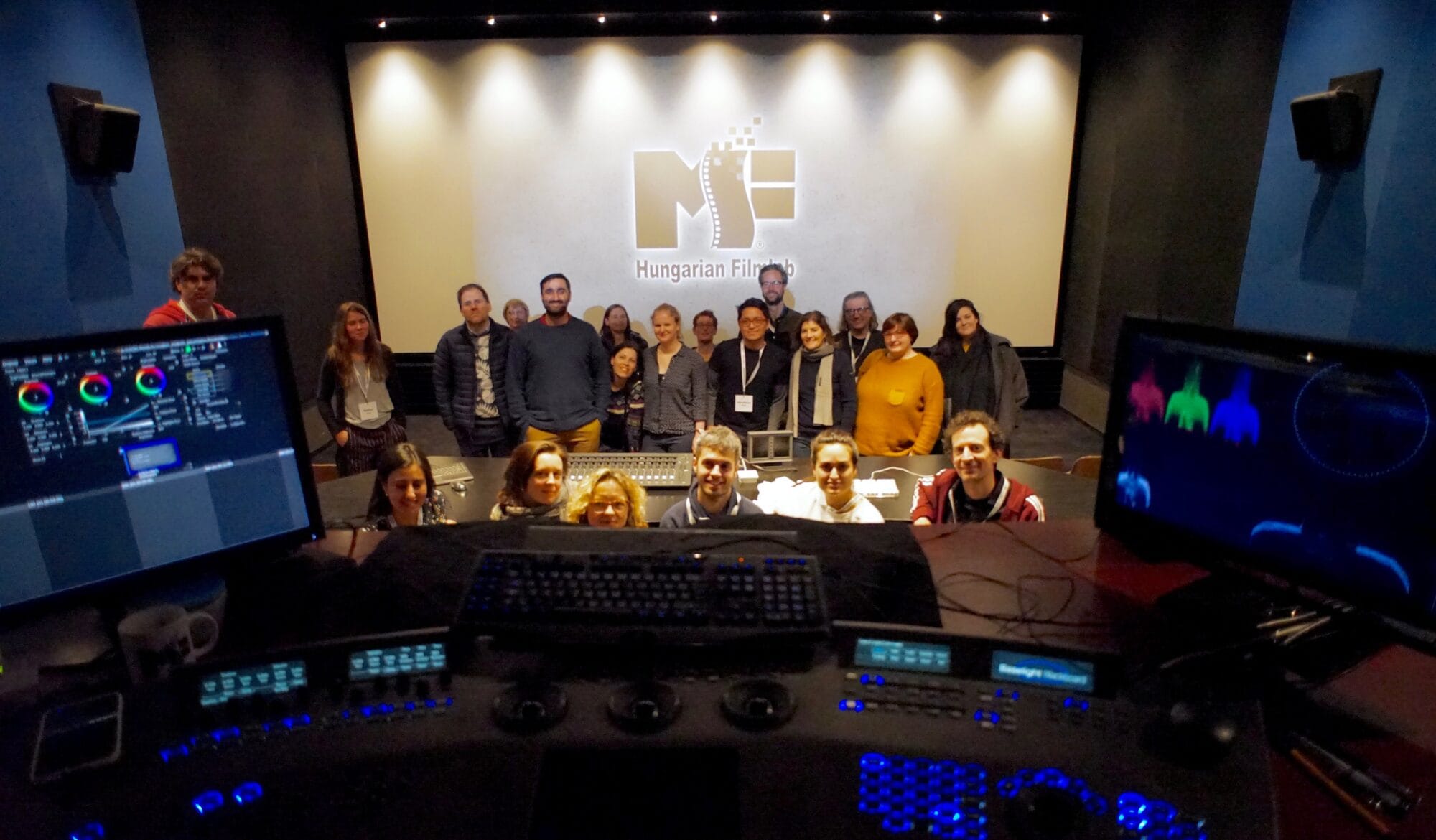
Producer, participant of the APostLab Annual Workshop in Budapest 2018
Could you introduce yourself and tell us what you were working on when you joined APostLab?
I’m a Finnish producer based in Helsinki. I joined APostLab in 2018 with Hatching, a horror film we were preparing to shoot. The film included a creature, which raised many questions around effects, budgeting, and how to combine animatronics with digital work.
For me, post-production had always felt like a bit of a mystery. During the workshop in Budapest, everything was broken down shot by shot. I realized post-production isn’t magic, it’s a process. You calculate time, hours, and costs. That understanding gave me a huge sense of relief as a producer.
What happened to Hatching after the workshop?
A couple of years later, the film premiered at Sundance. Unfortunately, it was during the pandemic, so the festival went fully online just before it started. Still, the film received strong attention and the sales went very well. Now we’re preparing our next horror feature, again with a female director and a feminist perspective, called The Mire.
You mentioned having an engineering background. How has that influenced your work as a producer?
I originally worked as a ventilation and HVAC design engineer, so I was used to managing projects with fixed budgets, schedules, and multiple collaborators. In film, especially back then, there wasn’t much formal producer training, and project management skills were often missing.
That background helped me transition smoothly into production. Running a film project isn’t so different: you manage time, people, resources, and risks. And I had always dreamed of working in film, so it felt like a natural move.
Looking back at APostLab, is there something specific that stayed with you?
I clearly remember sessions about resolution changes, like what it actually means to shift from 2K to 4K. There was also a case study of a Dutch film that really stuck with me.
But beyond the sessions, I remember the sense of community. After long days, we would go out for beers and talk. There was a strong feeling of companionship. I’m still in touch with people I met there, and that connection has stayed with me.
How do you approach collaboration with post supervisors today?
Back then in Finland, most post supervisors were tied to post-production houses, and it was hard to find freelancers. That’s changed now. For my new film, we’ve already started working with a post supervisor during script development.
It’s incredibly useful to discuss ideas early and understand how certain choices affect cost and complexity. That early collaboration helps avoid problems later.
You’ve made more than one horror film now. What advice would you give to someone wanting to work in the genre?
Horror travels well internationally, much more than drama. Language matters less. But for me, horror should never be just surface-level scares. It should be a way to explore deeper themes: fear, sexuality, identity, the subconscious.
I always ask: why does this story need to be told as horror? If there’s something meaningful underneath, then the genre becomes very powerful.
You spoke earlier about creating the creature. What was that process like?
Creating the monster took a long time. The animatronic creature for Hatching took almost a year to build. It was a step-by-step process that had to begin even before the film was officially greenlit, because we knew it would take time and involved risk.
At first, it was just materials, almost like a pile of plastic. But once we were on set, with five puppeteers operating it, something incredible happened. When those highly skilled professionals started moving the creature, it suddenly came alive. Seeing it move for the first time was a powerful moment. That’s the magic of cinema. It’s why I love this work.
Any final words for APostLab?
More networking drinks! Those events are great reminders of the community and they make you think, maybe I should apply again, or send our post supervisor next time. Keep up the good work.
Interview conducted by Monse Higareda Patrón (December, 2025).
