Interview with: Mandy Marahimin
Producer, Participant of APostLab Annual Post Production workshop in 2021 in Athens
We’re curious, what made you want to join APostLab?
The film I was producing required quite specific visual effects, but we couldn’t budget for them. I joined APostLab to find out if there were ways around it. What I learned was that we always have to match what we want creatively with what we can actually afford. The only way to do that is by running tests.
After APostLab, I had the tools to go back to my director and explain: “If you want this ending scene, it will cost this much, and we simply don’t have the budget.” For three years he resisted, but after the workshop—after doing storyboards and consulting with the DP, VFX, and SFX teams—he finally agreed. That clarity was a huge win.
I first applied to APostLab in 2020 and didn’t get in. I applied again in 2021 and was accepted. I’m very glad I tried again.
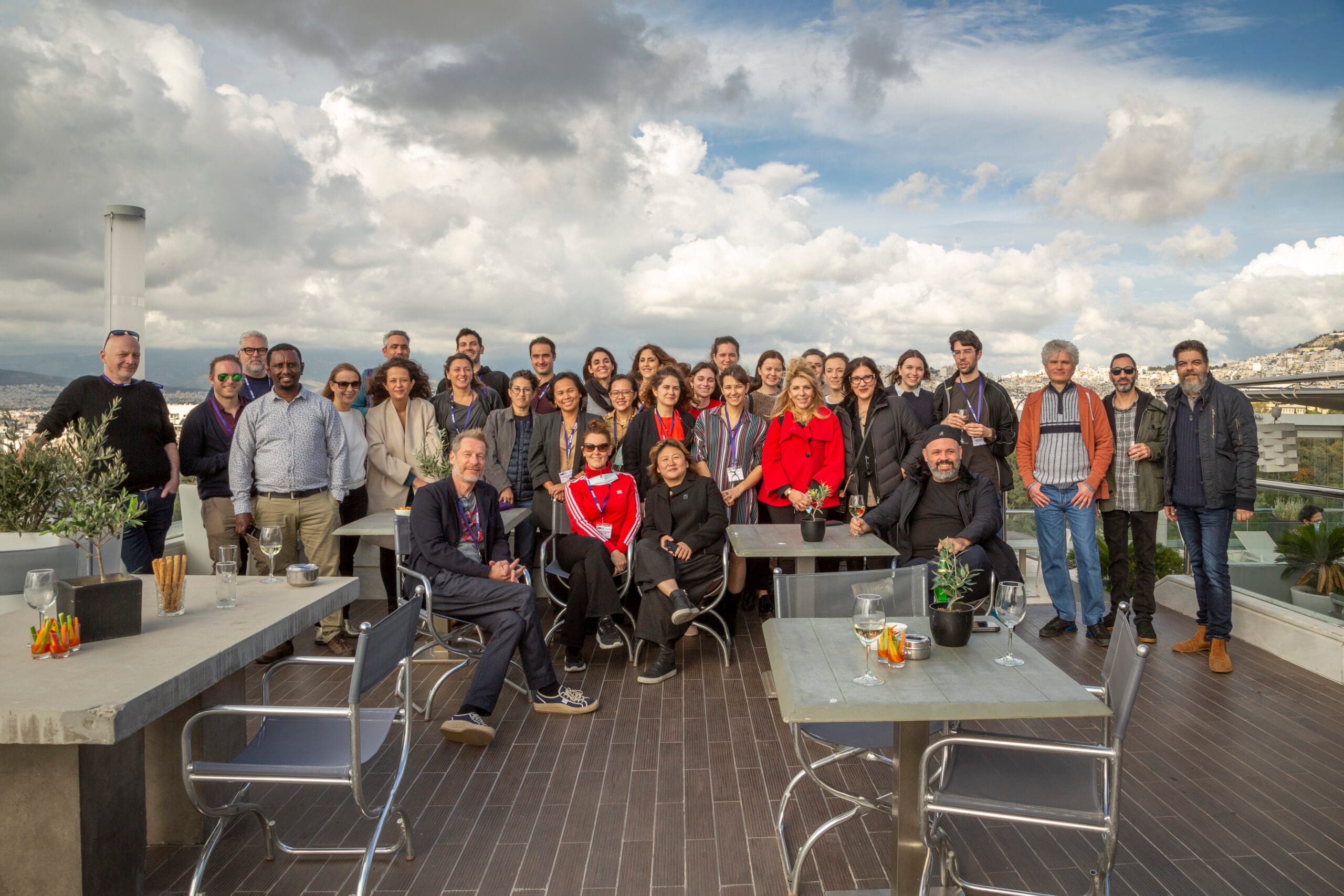
Can you share a favourite moment from the workshop in Athens, outside of the technical learning?
One evening we walked through a park after dinner and found a band playing while people were dancing. It was beautiful. And of course, the food in Athens was incredible.
Another highlight was connecting with a post supervisor who drew a complete workflow for my film. I couldn’t hire her because of funding restrictions, but with her permission I gave the diagram to my own post supervisor—and that became our plan.
What do you think makes a strong collaboration between a producer and a post supervisor?
Post supervisors are also producers, but with more technical expertise of the post production workflow. Post-production evolves so quickly that we need someone who’s always up to date with new workflows, color spaces, and systems.
A post supervisor should be hired very early. They’re the producer’s technical partner—the springboard for how to execute the creative vision. If you know how you want to finish the film, you know how to shoot it and how to prepare it. Post really starts everything.
How is the role of post supervisor viewed in Indonesia?
It’s becoming more important, but still misunderstood. Many producers only hire a post supervisor just before production, to handle data and run post. But in my opinion, they should come in much earlier.
We also have a shortage of good post supervisors in Indonesia—maybe five or six who really understand workflows. We need more, and we need to train people. That’s why I’d love to see something like APostLab for Southeast Asia. Our challenges are different from Europe’s, and a regional program would be very useful.
Is there anything you’d like to add about APostLab or your experience?
Yes—if you really want to grow as a producer, don’t just join producing workshops. Join other kinds, like script development or post-production workshops. APostLab was eye-opening and incredibly helpful. It shaped the way I approach all my future projects.
Interview conducted by Monse Higareda Patrón (September, 2025).
Interview with: Çiçek Kahraman
Film Editor, EP2C / APostLab Participant in Brussels 2013
You participated in APostLab in 2013. How did you first get involved?
I attended the Brussels,Belgium edition in 2013 after a friend working in international film festivals recommended it. At the time, it was called EP2C, and I joined as a post-production supervisor, since I was already editing and coordinating post-production on various projects.
That’s where I met Hans, Niko, and Neeltje, people who later became very important in my professional life. When I interviewed for Netflix in 2020 one of the people hiring me was Hans. That connection came full circle about six years later.
You later returned to APostLab as a trainer. What was that experience like?
It was incredibly emotional. Netflix partnered with APostLab for post-production training, and I was invited back as a trainer in the same program where I had once been a participant.
We ran workshops in Johannesburg and Madrid, and I found myself on stage with Neeltje discussing communication between editors and post-production supervisors. Neeltje and Niko had been my trainers in 2013, so returning in this new role really highlighted how meaningful and long-lasting these relationships can be.
Was there a key learning from APostLab that stayed with you over the years?
One of the most important aspects was the scope of productions APostLab addresses, from very low-budget independent films to large-scale productions. That inclusivity was unique.
The workshop didn’t focus only on ideal scenarios with big budgets. It also addressed how to navigate post-production realistically when resources are limited, for example, planning schedules honestly when people are helping you while also needing to earn a living elsewhere.
On a personal level, preparing my presentation with Niko was transformative. He pushed me to grow in public speaking and presentation skills and helped me overcome anxiety I didn’t even realize I had.
What advice would you give to someone who wants to become a film editor?
Film editing is 50% craft and 50% creative diplomacy. You’re often working with directors who are exhausted, insecure, or struggling to articulate what they want.
Communication is at the core of editing. If you already have those skills, great. If not, that’s where aspiring editors should focus: learning how to listen, communicate, and manage relationships. The conversation with the director is the foundation of the editing process.
Is there a recent project you’re particularly proud of?
One project I worked on as a consultant is the German Netflix documentary Babo. It follows a well-known German rap artist struggling with drug addiction and his journey of resilience.
What stayed with me most was how the documentary resonated with audiences and sparked conversations around addiction, recovery, and hope. Seeing a project contribute positively to public dialogue is incredibly rewarding.
Why do you think training programs like APostLab are important?
We don’t have time to learn everything through trial and error. Experience needs to be passed on, especially by people who know how to communicate it clearly and meaningfully.
What makes APostLab special is not just the experience of the trainers, but their passion. That passion is contagious, and it makes all the difference.
Interview conducted by Monse Higareda Patrón (December, 2025).
Interview with: Jevgeni Supin
Producer, participant of the APostLab Annual workshop 2025 – Helsinki and Tallinn
For those who don’t know you yet, could you introduce yourself?
I’m a producer working across different genres and formats. I started in non-scripted television, and over time I transitioned into scripted work. Today I mainly produce scripted projects, both films and TV series.
How did you hear about APostLab, and what made you apply?
There was an announcement from our national film institute about APostLab. It immediately caught my attention because I had already experienced how challenging it can be to oversee post-production on low-budget projects. I felt there was a lot I didn’t fully understand, and I thought the workshop could be very useful. So I applied, and fortunately, I was accepted.
Did the workshop meet your expectations?
It did more than that. It exceeded my expectations. I expected to gain new information, but not on this scale and not in such a structured way. For me, it opened a completely new world. I realized how complex and interconnected post-production really is, especially when working internationally. It genuinely changed how I look at the entire production process.
Is there one key learning that stayed with you?
Yes, very clearly: post-production starts in pre-production. That was a turning point for me. Before APostLab, I had never fully realized how many issues could be anticipated early on to make life easier later.
You applied with the series Let It Snow. How did APostLab influence that project?
The influence was definitely positive. Even now, when I read scripts, I automatically see details that affect budgeting and scheduling in post-production. Working closely with the post supervisors I was paired with, Raphaela and Emmi, was incredibly fruitful. We already developed preliminary approaches that I can use directly. And beyond that project, the timing was perfect because I have another production starting soon, and APostLab helped me ask the right questions early enough.
What do you think makes a strong collaboration between a producer and a post supervisor?
Communication, listening, and care. This applies not only to post supervisors, but to every crew member. You need to understand people’s needs and make them feel safe and supported. I strongly believe that a positive working environment is essential. Even when dealing with very difficult subject matter, trust and care within the team allow everyone to do better work and not assume others work like you do.
Do you have a favorite memory from the workshop?
It’s not a specific moment. What stays with me is the overall emotion. The feeling of being fully engaged, learning, exchanging experiences, and openly sharing mistakes. That atmosphere stayed with me more than any single event.
Would you encourage others to apply to APostLab?
Absolutely. Even if you think you already know a lot, the exchange between producers and post-production professionals is invaluable. Being in a safe environment, talking freely about challenges and wins and learning not only theory but also from the mistakes of others – broadens your perspective and challenges your assumptions. It’s an experience I would strongly recommend.
Is there anything else you’d like to add?
Just my thanks to the tutors and the entire APostLab team. I truly enjoyed the experience, and I hope the workshop continues to grow.
Interview conducted by Monse Higareda Patrón (December, 2025).
Interview with: Roshanak Behesht Nedjad
Producer and APostLab Group Leader
How many APostLab editions have you joined?
I think eight in total: two in Halle, then Budapest, Cagliari, Luxembourg, Ljubljana one online and the last one in Helsinki and Tallinn.
What makes you keep coming back?
It’s simple. First, it’s just one week — unlike other workshops that last two or three. But more importantly, I get to do what I love: mentoring. I also learn and stay updated on new technological advances in post-production. And I get paid for it! What’s not to like? I also love the people involved, I really enjoy working with my group leaders.
Is there a specific moment or mindset that stuck with you?
Yes. Guest experts often leave a big impression. One of my favorites was Nina Hartstone. In Halle, she brought excerpts from films she supervised as sound editor and, live in a sound studio, showed how she shaped the editing, mix, and sound design. It was fascinating.
What has been most rewarding about working with participants?
I learn from them. Every film is a prototype (as Katriel Schory always says). No matter how many you’ve done, every new one is unique. I also love seeing people progress, to start at one level and leave with more knowledge and confidence. That gives purpose to the work.
Have you ever ended up working in a production with one of the participants?
Indirectly, yes — some producers I’ve mentored have gone on to apply, and one project I co-produced came through APostLab. But I have a rule: if I mentor a project, they need to go through at least one or two big festivals or co-production markets before I’ll consider working with them. It keeps things fair.
Any memorable participant stories?
Definitely. From my group, two participants from different teams met and are now co-producing together. That’s the beauty of group work, in just one week, people bond, trust each other, and often stay in touch for years.
What projects are you working on right now?
I am in the middle of financing a German-Korean project and a UK-German one, plus a few films in development and in post.
Any advice for people starting out in post supervision or producing?
Don’t be afraid if you didn’t start early. I’m a late bloomer — I had another career before film. What matters is storytelling. Behind every finance plan, there’s a story. To supervise post, you need to know what the film is about so you can make the right decisions. And you don’t need to be a technical wizard, just understand enough to ask the right questions.
Interview conducted by Monse Higareda Patrón (July, 2025).
Interview with: Ada Solomon
Producer, EP2C/ APostLab Group Leader and Mentor in Vienna 2014
Could you introduce yourself and your connection to APostLab?
I first joined EP2C/ APostLab in 2014 in Vienna, although I admit I stopped keeping track. I have done so many mentoring programs over the years that I no longer include them all in my bio. At APostLab I was there as a mentor and group leader, not as a participant.
What made you want to join EP2C/ APostLabA as a mentor?
I am an engineer by training. The only diploma I have is in engineering. If you want to put it nicely, it is environmental engineering; if not, in Romania we jokingly call it “toilet engineering” because it deals with everything in a building.
That technical side is part of me, but I did not initially develop the same depth of understanding when it came to post-production. I worked mostly in physical production.
Over more than 30 years in the business I kept learning, especially about how production does not end when shooting ends. I knew that early on, but I was not as capable of planning or costing post-production as I was with physical production. I wanted to learn more about the process, the timing, and the choices.
I transitioned from shooting on film to digital, and I never trusted the idea that “we will solve it in post.” The more I worked, the more I understood that everything you want to do in post has to be planned. I also wanted to see how other producers, especially creative producers, collaborate with post teams and make early decisions.
EP2C/ APostLab was perfect for that. I came very eager to learn, not only from specialists but also from colleagues in the group. I never felt above the participants. I felt like one of them, just coordinating. The exchange was wonderful. And the world that opened up through the post-production experts helped me tremendously.
I still remember one project very clearly, the Icelandic film Lamb. It was in an early stage at the workshop. The discussions about mechanical versus digital effects for the lamb, and what was possible within their restrictions, were incredibly interesting.
Is there something you learned during that 2014 edition that has stayed with you?
Yes. It was the two-directional flow of information. Not only knowledge going from the producer and director toward post-production, but also from the artists and technicians back toward the initial creators. That mutual recognition, that we are all filmmakers and artists, was something EP2C/ APostLab really cemented for me.
What are you working on now?
I am still working as a producer. Right now we are close to starting the festival journey of the first feature directed by a Roma woman. It is a very powerful and personal story, partly inspired by her own journey of becoming who she is and realizing her strength despite coming from a marginalized community.
It is a classical film in terms of production approach, but very touching. And even before we had a production schedule, we were already discussing with post-production teams. We set up the workflow early and figured out who matched with whom and what we needed. That kind of early collaboration makes a big difference.
In your experience, what makes a good collaboration between a producer and the post-production team?
It all comes down to teamwork. To summarize: no one knows better alone.
Filmmaking is never a solitary process. I need people around me. I need to exchange ideas. And even when the final decision is mine, I do not feel safe without consulting others. Maybe someone has tried something before or sees a risk I do not. I value that exchange immensely.
You have worked internationally. Have cultural differences shaped your collaborations?
Very much. It is fascinating to see habits from different parts of the world. In Romania, or Eastern Europe in general, we are used to long hours and forgetting about weekends when something must be delivered. But I have learned the importance of limits.
Generations also play a role. Younger generations guard their private time more carefully. They need space to explore, and that is healthy.
Co-productions make these differences even more visible. For example, on a recent film we had sound and VFX done in Spain, color correction in Italy, editing in Serbia, and everything put together in Romania. Even if materials travel digitally now, styles, timing, and working rhythms vary a lot. You cannot assume others work like you do.
APostLab aims to build a long-term community. Are you still in touch with people from your edition?
We cross paths in different contexts. I cannot point to a specific collaboration, but when you are part of such a community you follow projects and feel a sense of belonging. When someone’s film succeeds, even if your name is not in the credits, it feels a bit like yours. You shared something during the process. It is like being proud of an athlete from your country. You did not make them champions, but you still feel connected.
That sense of belonging is very strong in this community.
Interview conducted by Monse Higareda Patrón (September, 2025).
Interview with: Mika Ritalahti
Producer, participant of the APostLab Annual Workshop in Budapest 2018
Could you introduce yourself and tell us what you were working on when you joined APostLab?
I’m a Finnish producer based in Helsinki. I joined APostLab in 2018 with Hatching, a horror film we were preparing to shoot. The film included a creature, which raised many questions around effects, budgeting, and how to combine animatronics with digital work.
For me, post-production had always felt like a bit of a mystery. During the workshop in Budapest, everything was broken down shot by shot. I realized post-production isn’t magic, it’s a process. You calculate time, hours, and costs. That understanding gave me a huge sense of relief as a producer.
What happened to Hatching after the workshop?
A couple of years later, the film premiered at Sundance. Unfortunately, it was during the pandemic, so the festival went fully online just before it started. Still, the film received strong attention and the sales went very well. Now we’re preparing our next horror feature, again with a female director and a feminist perspective, called The Mire.
You mentioned having an engineering background. How has that influenced your work as a producer?
I originally worked as a ventilation and HVAC design engineer, so I was used to managing projects with fixed budgets, schedules, and multiple collaborators. In film, especially back then, there wasn’t much formal producer training, and project management skills were often missing.
That background helped me transition smoothly into production. Running a film project isn’t so different: you manage time, people, resources, and risks. And I had always dreamed of working in film, so it felt like a natural move.
Looking back at APostLab, is there something specific that stayed with you?
I clearly remember sessions about resolution changes, like what it actually means to shift from 2K to 4K. There was also a case study of a Dutch film that really stuck with me.
But beyond the sessions, I remember the sense of community. After long days, we would go out for beers and talk. There was a strong feeling of companionship. I’m still in touch with people I met there, and that connection has stayed with me.
How do you approach collaboration with post supervisors today?
Back then in Finland, most post supervisors were tied to post-production houses, and it was hard to find freelancers. That’s changed now. For my new film, we’ve already started working with a post supervisor during script development.
It’s incredibly useful to discuss ideas early and understand how certain choices affect cost and complexity. That early collaboration helps avoid problems later.
You’ve made more than one horror film now. What advice would you give to someone wanting to work in the genre?
Horror travels well internationally, much more than drama. Language matters less. But for me, horror should never be just surface-level scares. It should be a way to explore deeper themes: fear, sexuality, identity, the subconscious.
I always ask: why does this story need to be told as horror? If there’s something meaningful underneath, then the genre becomes very powerful.
You spoke earlier about creating the creature. What was that process like?
Creating the monster took a long time. The animatronic creature for Hatching took almost a year to build. It was a step-by-step process that had to begin even before the film was officially greenlit, because we knew it would take time and involved risk.
At first, it was just materials, almost like a pile of plastic. But once we were on set, with five puppeteers operating it, something incredible happened. When those highly skilled professionals started moving the creature, it suddenly came alive. Seeing it move for the first time was a powerful moment. That’s the magic of cinema. It’s why I love this work.
Any final words for APostLab?
More networking drinks! Those events are great reminders of the community and they make you think, maybe I should apply again, or send our post supervisor next time. Keep up the good work.
Interview conducted by Monse Higareda Patrón (December, 2025).
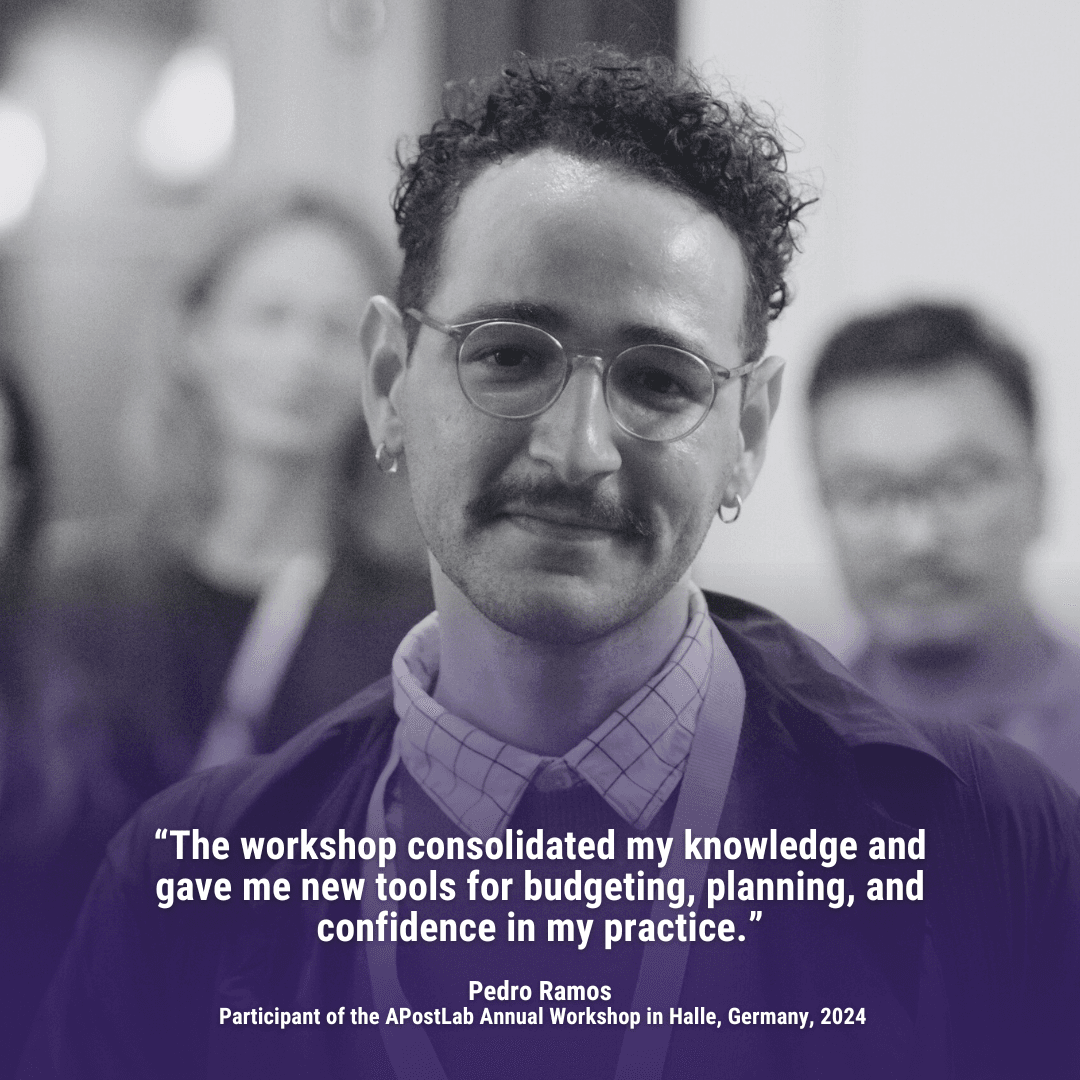
Interview with: Pedro Ramos
Post Supervisor, Participant of the APostLab Annual Workshop in Halle, Germany, 2024
What drew you to participate in APostLab?
Pedro: For me, joining APostLab was a natural next step. I already knew Niko, and I had taken part in other post supervision trainings, one of which was in partnership with APostLab. It had been on my radar for a while, and I’d always heard great things from colleagues who participated in previous editions. I wanted to deepen my skills and expand my understanding of post-production, so it made perfect sense.
How did that experience influence your professional path?
Pedro: It had a big impact. The workshop consolidated a lot of knowledge I’d been building through practice. It gave me both a solid technical foundation and new tools for budgeting, planning, and understanding how all the pieces of post-production fit together. I also gained more confidence in my practice, which was really important.
Have you been able to adapt those learnings to your day-to-day work?
Pedro: Definitely. I may not have applied everything yet—because there was a lot of information—but much of it is already in use. Some things I’m still unpacking. Sometimes I go back to my notes from the workshop when I’m facing a challenge and find that something we covered applies directly.
Was there a particular moment or mindset that stuck with you from the workshop?
Pedro: Yes. I remember the final dinner, when everyone received their diplomas and shared their key takeaways. Many of us felt the same: “This was a lot of input—now how do we integrate it into our daily work?” That’s something I’ve kept thinking about—how to turn all that knowledge and exchange with other participants, trainers, and guests into something practical. It’s still an ongoing process.
Can you tell me more about your current work?
Pedro: I work in-house at Coproduction Office, a production and international sales company, and I’m involved in both areas of the business. That includes overseeing post-production for some of our projects, managing deliveries and working closely with sales agents, distributors, festivals, and vendors. It’s a good mix of responsibilities across different parts of the industry.
What would you say are the key elements of a successful collaboration between a producer and a post supervisor?
Pedro: Communication, without a doubt. Keeping an open, honest flow of communication helps both sides do their job better and ultimately serves the project. It’s essential.
Any advice for someone starting out as a post supervisor—or thinking about it?
Pedro: My advice would be: just do as much as you can and gain experience. There’s no one clear path into filmmaking. People come from all kinds of backgrounds. I started in architecture, then moved into art direction, editing, directing documentaries, working in immersive media, and eventually into post supervision. Every step taught me something valuable. So it’s about staying curious, building skills as you go, and learning by doing.
I find it fascinating how many people in film come from different industries. It really shows how diverse the field is.
Pedro: Yes, and even if the skills aren’t directly transferable, the way of thinking often is. Film is such a collaborative space, and it attracts people from all walks of life who share the goal of creating something together.
Are you still in touch with people from your APostLab cohort?
Pedro: Absolutely. That sense of community was one of the most valuable parts of the experience. I made close friends and developed connections that continue to be useful—whether it’s sharing information, asking for advice, or just understanding that others are facing similar challenges, even across countries and project scales.
How does APostLab compare to other workshops you’ve attended?
Pedro: Honestly, I don’t think there’s anything else like it in Europe for post-production. The scope is really unique—360 degrees of training, with amazing trainers, speakers, and guests. One part I found especially enlightening was the insight into production—understanding how producers think and what challenges they face when planning post-production. That cross-disciplinary exchange was incredibly helpful.
When you joined APostLab, you were already established in your current role. How has the workshop influenced your work since then, and what kinds of projects have you been focusing on recently?
Pedro: Right now I’m really happy while continuing to develop in post-production. My job involves a lot of different things—from working with producers and vendors to coordinating with festivals and handling restoration projects. It’s very dynamic, which keeps it exciting and challenging. Recently, I’ve also had the chance to complete several productions, including the restoration of Carlos Reygadas’ Silent Light, which was a particularly rewarding experience.
Anything else you’d like to add?
Pedro: I’d just like to express my appreciation for APostLab. The work the team does is incredibly important. You can really see the care, passion, and hard work they put into it. And I know it has a real impact—not just on the careers of those who attend, but on the industry as a whole, especially through the community it builds.
Interview conducted by Monse Higareda Patrón (July, 2025).
Interview with: Isazaly Isa (Zalee)
Post Supervisor, Participant of the EP2C (now APostLab) Annual Workshop in Halle, Germany, 2016
You were a participant in the 2016 EP2C/ APostLab workshop in Halle, Germany. What made you decide to apply to this training nine years ago?
Actually, it took me three tries to get in! I think I first applied around 2013. I didn’t know much about the program then, I probably saw it through an email list and thought, “Why not try?” I was rejected twice, and on the third try, they said, “We remember you, let’s give it a go.”
I didn’t realize I would be the first Asian post producer to ever join the program. That was really exciting and an eye-opener for me.
At that time, I had just finished editing a feature film called Redha — the first Malay film that represented Malaysia for the Oscars. I wasn’t officially a post supervisor, but the producer asked me to handle everything in post because no one really understood that role yet.
So when I attended the workshop in Halle, I realized that what I was doing was actually post supervision. That’s when it clicked for me.
Did that experience changed how you saw your role in post-production?
Completely. Back then in Malaysia, editors usually did everything — editing, sound, delivery — because we didn’t have post supervisors.
After EP2C/ APostLab, I finally understood how the European industry works. Doing breakdowns with Niko and the team opened my eyes to how structured post-production could be.
When I came home, I decided to officially take on post supervision as my main role. Today, I’m one of the few post supervisors in Malaysia who can handle anything from small projects to big-budget films.
Has the role of post supervisor grown in Malaysia since then?
Yes, it’s growing fast. I’ve trained a few post producers along the way. I also teach at four universities and introduced post supervision as part of their film studies.
Before, students only learned about editing and color grading, but now they also study what a post supervisor actually does.
It sounds like you’ve really helped shape this field in Malaysia?
I really owe that to EP2C/ APostLab. The exposure opened my mind about what a post supervisor’s job really is.
A few years later, another Malaysian producer joined the lab — Foo Fei Ling, who produced Tiger Stripes, which won at Cannes two years ago. I was the post supervisor for that film, at least in the early stages, since it was a seven-country collaboration.
You’re now also the president of the Post Production Professional Association in Malaysia. Can you tell us about that?
Yes! it’s called MyPostPro (mypostpro.my). As president, I’m working to make it standard that every film in Malaysia hires a post supervisor.
We’re now an official panel with the National Film Development Board of Malaysia (FINAS). They only approve post-production grants if a post supervisor is attached to the project.
It’s really changed the industry, we’ve raised professionalism, pay scales, and awareness of the importance of post.
That’s an incredible achievement. What would you say makes a successful collaboration between a producer and a post supervisor?
Respect. Producers need to see the post supervisor as the person who gives them peace of mind during post-production. Without one, producers end up chasing deadlines, talking to ten different people, and getting lost in technical issues. When you have a post supervisor, you can actually sleep at night, because that’s our job.
If you think back to nine years ago, what’s one key moment or skill you still remember from the workshop?
The session on post-production budgeting really stuck with me. We had to break down post budgets based on the script. When we compared the costs, everyone was shocked that Malaysia was so cheap, even though I had doubled our usual rates!
That was when I realized how undervalued and underpaid we were. It motivated me to raise professional standards when I came home, and we’ve made big progress since then.
If someone new wanted to become a post supervisor, what advice would you give them?
You need two things: passion and patience.
With those two, you can survive this industry. I’ve been doing this for 25 years, and I still feel like I’m learning every day. Sometimes you work for free or do pro bono projects, but that’s part of the journey. One day, your work will speak for itself, and people will come looking for you.
Have you collaborated with other EP2C or APostLab alumni?
Not many from Asia, since there are only a few of us, but I did work with Foo Fei Ling on Tiger Stripes.
Before that, I worked on a Malaysia–UK co-production called Shadowplay, where I was both post supervisor and producer. It was a small indie film that ended up being distributed internationally — that was my first full start-to-finish post supervision job.
Do you still edit, or do you prefer supervising now?
I still edit, and I love it! editing is like second-time directing.
If I can’t direct, I edit. But when I make my own short films, I never do any cuts. They’re all one long take, because as an editor, I don’t want to edit my own work!
That’s such a fun approach. Any last thoughts you’d like to share?
I really hope we can bring APostLab to Asia one day. There’s a huge demand here, and the region really needs this kind of training and community.
I’m proud to be a graduate of APostLab — it changed my career and the way post-production is seen in Malaysia.
Interview conducted by Monse Higareda Patrón (July, 2025).
Interview with: Olha Matat
Producer, Participant of the APostLab Annual Workshop in Ljubljana 2023
What inspired you to apply for APostLab?
Honestly, curiosity. Nobody recommended it, I just saw the call and thought, “This is about post-production, and I need to know more.”
On my previous project, How Is Katia?, the post wasn’t complicated, but it still gave me gray hairs. In Ukraine, we often don’t have dedicated post supervisors, and the approach is very different from countries like Germany or France. I wanted to learn how European productions manage it.
At first, I was afraid it would be too technical, but Niko reassured me: “Don’t worry, this is for producers like you. You don’t need to know every technical detail, you need to understand the process, the structure, the budgeting.” That gave me confidence.
Can you tell me what happened with the project you applied with, “TEURA”?
That was actually the first workshop we did with that project. I worked with my partner, Olena Morentsova — co-writer and producer. From the start, we knew it was complicated: a period story with heavy post-production needs. At the workshop, everything changed.
Speaking with tutors like Niko, Antoine, and Roshi, we realized we should shoot more on real locations instead of relying on post, even though it’s more expensive. They also encouraged us to go deeper in unveiling the personal path of Sofia Yablonska, which is very relevant and reflects the modern times feelings and challenges of Ukrainian women, who had to move out of Ukraine because of the Russian invasion.
We rewrote the project, went to Torino Film Lab, and now it has grown into a major international co-production between Ukraine, France, Morocco, and hopefully Germany. We just applied to Creative Europe.
What was one of the biggest lessons from the workshop?
Many, but one moment really shocked me. In a session on music rights, I realized how complicated and expensive clearing music can be. Another eye-opening moment was when tutors broke down an actual film scene and showed exactly how much each second of it cost in post-production.
That kind of concrete example is invaluable. As a producer, you suddenly see, “Okay, this shot might cost €200, €2,000, or €20,000.” It helps you plan realistically.
Also, my strongest recommendation: apply with the real project. By the end of APostLab, you’ll leave with a post-production budget and a clear roadmap, saving a producer so much headache.
What advice would you give to producers considering APostLab?
For young producers, it’s perfect! it gives awareness of the whole production chain. Many workshops focus on story, but APostLab shows what happens with the actual material: editing, color grading, sound, deliverables.
For experienced producers, it’s just as important because technology changes fast. Something you did five years ago may be outdated today. And of course, it’s about meeting great people, that’s maybe the most valuable part.
How do you approach working with post supervisors now?
Be open, and don’t be afraid to ask “stupid” questions. Post supervisors know more than producers ever will — that’s okay. Our job is to understand the structure, the top of the iceberg, not every technical detail.
Sharing perspectives is powerful. Producers and post supervisors often don’t realize how hard the other’s job is. But once you start collaborating, you see: “Ah, your work is complicated too!” Mutual respect is the basis of strong collaboration.
Any final thoughts?
A huge thank you to the APostLab team. You’ve created not just a workshop, but a real community built on trust and support.
For producers hesitating to apply, don’t. Even if your project is in early development, APostLab gives you a chance to see it from another angle and strengthen it before production.
Interview conducted by Monse Higareda Patrón (September, 2025).
Interview with: Gabi Basilici
Gabi Basalici Post Supervisor, Participant of the APostLab Annual Workshop in Luxembourg in 2023, and the Mentorship Program in 2024.
You joined both the APostLab annual workshop in Luxembourg and later the mentorship program. What made you want to participate?
Gabi: I have a background in film editing, so the transition for me was easy. At some point I found myself working as a post supervisor on a feature film. I realized there were gaps in my knowledge, and I wanted to learn more. One of the producers I work with had been to APostLab in Romania and recommended it. I joined in Luxembourg in 2023, and because I really enjoyed the mentors and the program, I later applied for the mentorship programme as well.
What are you working on these days?
Gabi: I’m still between film editing and post supervising. I work more as an editor on short-form projects, and as a post supervisor on long-form. Recently, we finished Dinți de lapte (Milk Teeth), the project I worked on during the mentorship. It premiered in Venice this year and also screened in Toronto. APostLab is in the credits, which makes me very proud.
What was the main difference between the annual workshop and the mentorship program?
Gabi: The workshop was more about group presentations and case studies, while the mentorship was directly applied to my own project. Each mentee had to present progress and challenges, and we received very concrete feedback. For me, it was complementary: the workshop provided a big-picture view of the post-production process—while the mentorship helped me refine how I manage timelines, workflows, and communication across the whole team.
Looking back at the Luxembourg workshop, is there a moment that really stayed with you?
Gabi: I remember the case studies vividly. For example, Planet X presented their work, and Nina shared her project about Freddie Mercury. I loved the sessions that weren’t abstract but applied directly to projects. Those were moments where I thought, “How would I implement this in my own work?”
Do you have any advice for people interested in becoming a post supervisor or joining the mentorship program?
Gabi: For editors who don’t see themselves sitting at a desk long-term, post supervising is a great option. Editing is more isolated, and you’re usually linked to a single project for an intense period of time, but as a post supervisor you start to network and communicate with many more people, often juggling several projects at once. And one very practical piece of advice: even when you’re buried in deliverables and credits, at some point they’re going to end, so it’s not the end of the world.
Anything you’d like to add?
Gabi: I want to thank the APostLab team, because they are building a real community with APostLab. It’s not easy—between funding, scheduling, and logistics, but they’ve made something very meaningful.
Interview conducted by Monse Higareda Patrón (September, 2025).